The Economics of Showing Up
The bus from Gondar to Debark was stopped three times that day. Ambagiorgis first, then Dabat, then Weqn. At each checkpoint young men with rifles got on and looked at the older man sitting next to me in the front seat. They had decided, somewhere between stops, that he was a government official.
I was 23. He was maybe sixty. I had been talking to him since we left Gondar, the way you talk to whoever is next to you on a long ride in Ethiopia, about where he was going, who he was visiting, the weather coming down off the Simien escarpment. At the first checkpoint they pulled him aside. The driver got down. I got down. I didn't argue. I had a bag of qollo, the roasted barley everyone shares on long rides, and I offered some to the men at the checkpoint and stood next to him while the driver talked. They let him back on.
At Dabat they pulled him off again. Same thing. At Weqn, a third time. By the third stop the driver was begging openly. I was still mostly standing there.
The road from Gondar to Debark is the most beautiful road I have ever been on. It climbs into the Simien escarpment and at some point you are literally driving inside the clouds. I have no footage of it. I kept my phone hidden the entire ride.
I was on that bus because Synergy Trips, my company, had been assigned to set up e-ticketing in the Debark Zonal Bus Station (Menehariya).
Synergy Trips is a bus station (Menehariya) e-ticketing provider company in Ethiopia. We started later than our competitors. In the Amhara Region, bus stations are allocated by regional regulators. You don't pick your stations, you get the ones that haven't been claimed. By the time we entered the market, the desirable stations were taken. What was left for us was the territory nobody else would touch: the Gondar–Debark corridor running north into the highlands, and on the western edge of the region, the Welkait–Tegede–Setit Humera zone, which included Dansha, Humera, and Maykadra.

Going wasn't a choice between safe and brave. It was a choice between going and not having a company. If we waited for the situation to stabilize, the stations would be reassigned and the chance would be gone. We had four co-founders. I pushed for more than a month before one of them agreed to come with me. Their fear was reasonable. What we were weighing against it wasn't fourteen jobs (those jobs didn't exist yet); it was the chance to build something that would eventually employ fourteen people and grow from there. That distinction matters. We weren't protecting a payroll. We were protecting the possibility of one.
This is the part of the story that doesn't make it into the version people want to tell about founders in hard places. The supply of people willing to physically be in conflict-affected markets is partly produced by people imposing risk on others under commercial pressure. I forced the issue. He came. We went.
I want to make a structural claim about what happened next, but I need to set it up first.
There's an economic input that classical models don't account for. Call it presence: physical, decision-empowered presence in a place where things are hard. Standard economics assumes labor and capital are mobile, that frictions are transactional rather than existential, that the same actor who can operate in Addis Ababa can in principle operate in Maykadra. They can't. The frictions are not transactional. They are about whether you, specifically, in your body, at your age, can be in a room and be received.
Presence under those conditions is systematically undersupplied, and it's worth being precise about why.
Governments don't supply it because their local capacity is weak in exactly the places that need it most, their officials face principal-agent problems with the regional level, and their political incentive is to declare problems solved rather than work on them.
NGOs don't supply it because their mandates often prohibit commercial activity, their priorities are set by donors who are not in the room, and their security policies pull staff out at the first sign of trouble, which is to say at exactly the moment the work would matter.
Large firms don't supply it because shareholder accountability, insurance, HR policy, and approval chains make sentences like "send three people to Debark for six months" structurally impossible to utter inside the company.
What you're left with is a residual category. Late-entrant operators, often without polish or strong networks, who are routed by allocation systems to ground that the saturated incumbents have skipped. They go because the alternative is not having a business. This is, as far as I can tell, where most of the actual supply of presence comes from in markets like the one I'm describing. Not from courage. From competitive position and timing.
The Welkait zone was a different kind of work than the Gondar corridor. We traveled there in a convoy. We got stuck for four days in a place called Sanja, waiting for a military decision we had no influence over and no information about. Most of the texture of conflict-zone operations is not in the moments people imagine. It is in Sanja. It is sitting in a guesthouse for four days, eating, sleeping, not knowing whether the answer will come today or in a week or whether it will be no. The convoy moved one morning in the middle of breakfast. The window opened, we left food on the plates, and we went. We got to Humera, then Dansha, then Maykadra. We set up the stations and installed our ticketing software on machines.
This is the part that filters more people out than danger does. Most people can imagine being brave for an hour. Almost no one volunteers to wait in Sanja for four days, with the chance that the answer is "go home."
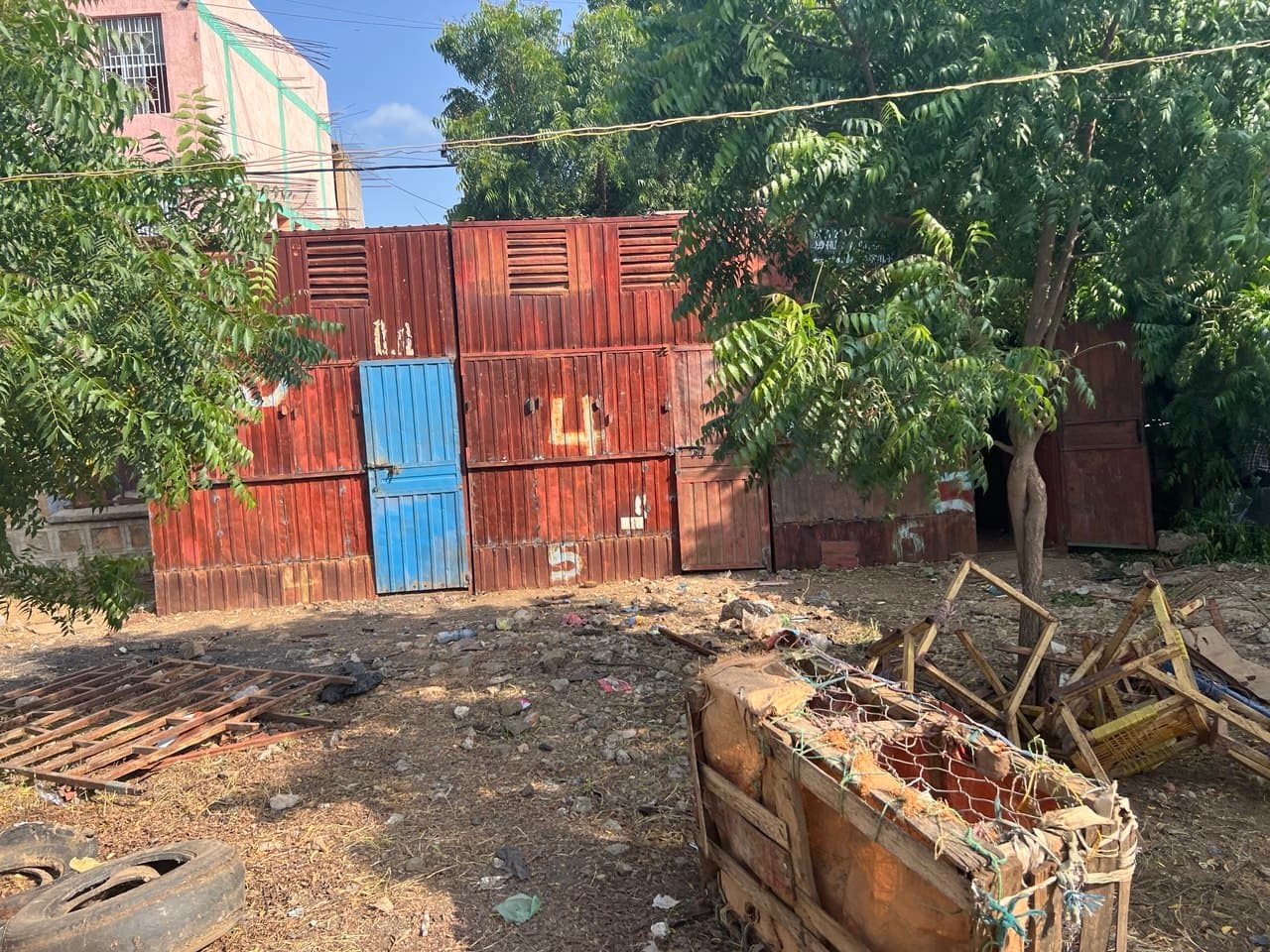
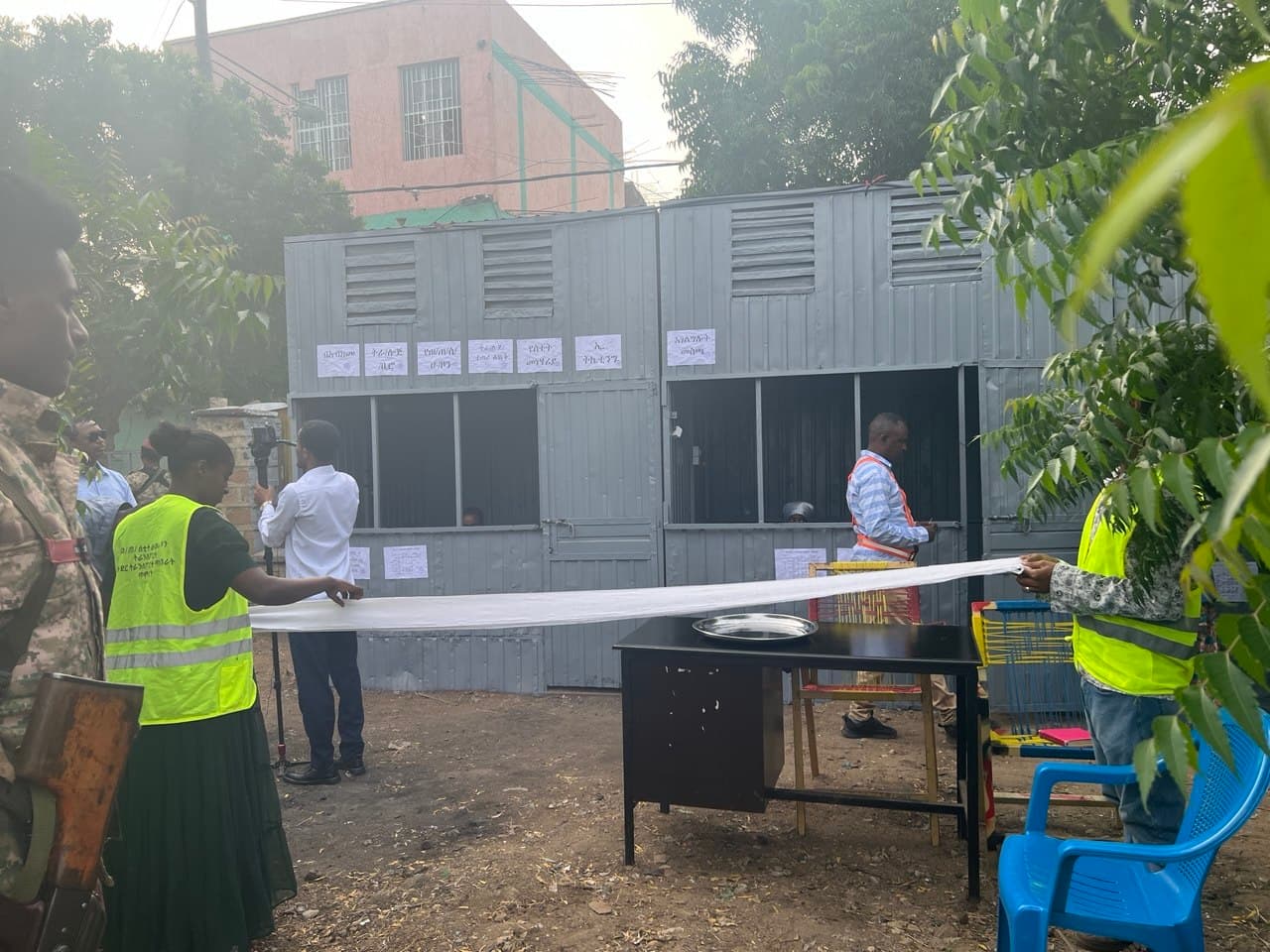
Once on the ground in Welkait, something I hadn't expected: many of the regional leaders I met were visibly refreshed to be talking to someone younger. They were more open to digital systems, more willing to change how stations were run, more curious about what we were actually proposing than I had been told to expect. Not all older operators are closed. Some of the most open allies I found were older leaders who had been waiting, apparently for a long time, for someone they could actually engage with. The under-deployment of youth in this work doesn't only break the young-to-young interaction surface. It breaks the whole surface. The older leader who would have said yes never gets the meeting because the person sent to take the meeting is someone he's structurally inclined to deflect.
The day-to-day layer was where the legibility argument became most obvious to me, and most quantifiable in its absence.
Bus stations are run by drivers and their assistants, the redatoch. They are the operational layer. They have constant problems, complaints, and negotiations with the company: schedule disputes, fare adjustments, fuel allowances, conflicts with passengers, conflicts with each other. With my older co-founders, those interactions tended to escalate, or stall, or surface only after they had already become real problems. With me, they didn't. A dispute that would have taken three rounds with one of my co-founders resolved in one conversation with me. A complaint that a redat would have sat on for a week, letting it build into a walkout, he would bring to me on day one. A negotiation that would have ended with both sides hardened ended with the redat feeling heard.
The conflicts we avoided don't appear in any metric. They are the absence of strikes, the absence of station shutdowns, the absence of operators who quietly stop selling our tickets and revert to paper. They are the difference between a station that runs and a station that doesn't, and they were produced almost entirely by the fact that the person on our side of those conversations was someone the redat could speak to as a peer.
I want to be careful here. I am not saying I am better than my co-founders at this work. I am saying that for this specific layer of the work, the input that mattered was generational proximity, and they didn't have it. They had other inputs that mattered elsewhere. But the daily operating surface of a bus network in Amhara, in 2025, runs on the ability to be received by twenty-five-year-old drivers and their assistants. That ability is not evenly distributed across a co-founding team.
Now back to the bus.
I was safe on the Gondar–Debark ride, and I could stand next to the older man and have my standing-there mean something, because I was legible to the young men at the checkpoint as one of them. Same age range, same posture. That legibility is not a personal trait. It is an economic input that becomes load-bearing in places where formal authority has collapsed and the people holding coercive power are themselves young.
If presence is undersupplied, and if the supply that does emerge comes mostly from late-entrant operators routed to hard ground by allocation systems, then the lever is not "make brave people braver." It is to design market entry so that the hard ground gets routed to capable latecomers, on purpose, rather than left empty by accident.
Two specific mechanisms.
First, allocation as policy instrument. Regional regulators in Amhara already allocate bus stations. The allocation today is residual: incumbents take what they want, latecomers get what's left. That residual mechanism, by accident, produces the supply of presence I'm describing. It could do it on purpose. A regulator could affirmatively route conflict-affected and underserved territory to qualified late entrants, with simplified registration, deferred fee structures, and a defined window of exclusivity long enough for the entrant to recoup the cost of going. This wouldn't require new institutions. It would require treating "willing and capable to operate in hard territory" as an allocation criterion rather than a residual property.
The same logic generalizes beyond bus stations. Telecom licenses, banking agent networks, fuel distribution rights, pharmacy permits: anywhere a regulator allocates commercial access geographically, there is a lever to deliberately channel capable late entrants into the territory incumbents skipped.
Second, structured risk-sharing for the operators who go. A small operator entering a conflict-affected market today carries the full risk personally. There is no insurance market for it, no public guarantee, no syndicate structure. A guarantee facility (public, donor-backed, or hybrid) that explicitly covered a defined slice of the operational risk for qualified small operators in regulator-designated hard territory would change the calculation at the margin for hundreds of would-be entrants. Not by making the work safe. By making it survivable to fail.
I'm aware these are mechanisms a state has to want to build. The argument for why a state should want them is straightforward. The places that don't get shown up to compound their disadvantage. They get less infrastructure, less commerce, less of the daily institutional weight that comes from a functioning market. The cost of that compounding is paid by the people who live there, and ultimately by the state itself, in the form of regions that fall further behind and become harder to govern. Allocating presence on purpose is cheaper than absorbing the cost of its absence.
I want to engage the counter-arguments directly.
Doesn't this subsidize recklessness? It could, if designed badly. The mitigation is in the qualification criteria (capability, track record, prior operations) and in the structure of the guarantee, which should cover defined operational risks, not blanket losses. The point is not to send unqualified people into dangerous places. It is to remove the marginal disincentive for qualified people who would otherwise not go.
Doesn't this attract bad actors? The same qualification criteria filter for this. And the people I'm describing (small operators, late entrants) are not the typical bad-actor profile. The bad actors in conflict-affected markets are usually well-capitalized, well-connected, and already there. Lowering the barrier for qualified small operators dilutes their position rather than concentrating it.
Doesn't this just shift the equilibrium so presence stops being scarce, and the returns disappear? Partially, yes. That is the goal. The returns to presence are currently a marker of dysfunction: they exist because supply is artificially constrained by institutional failure. If presence becomes less scarce, the returns to it fall, and the regions that needed it get the infrastructure they were missing. That's the outcome we want. The operators who showed up first under the current dysfunction will be fine; they have first-mover positions. The next generation of operators won't need to be as exceptional, which is the point.
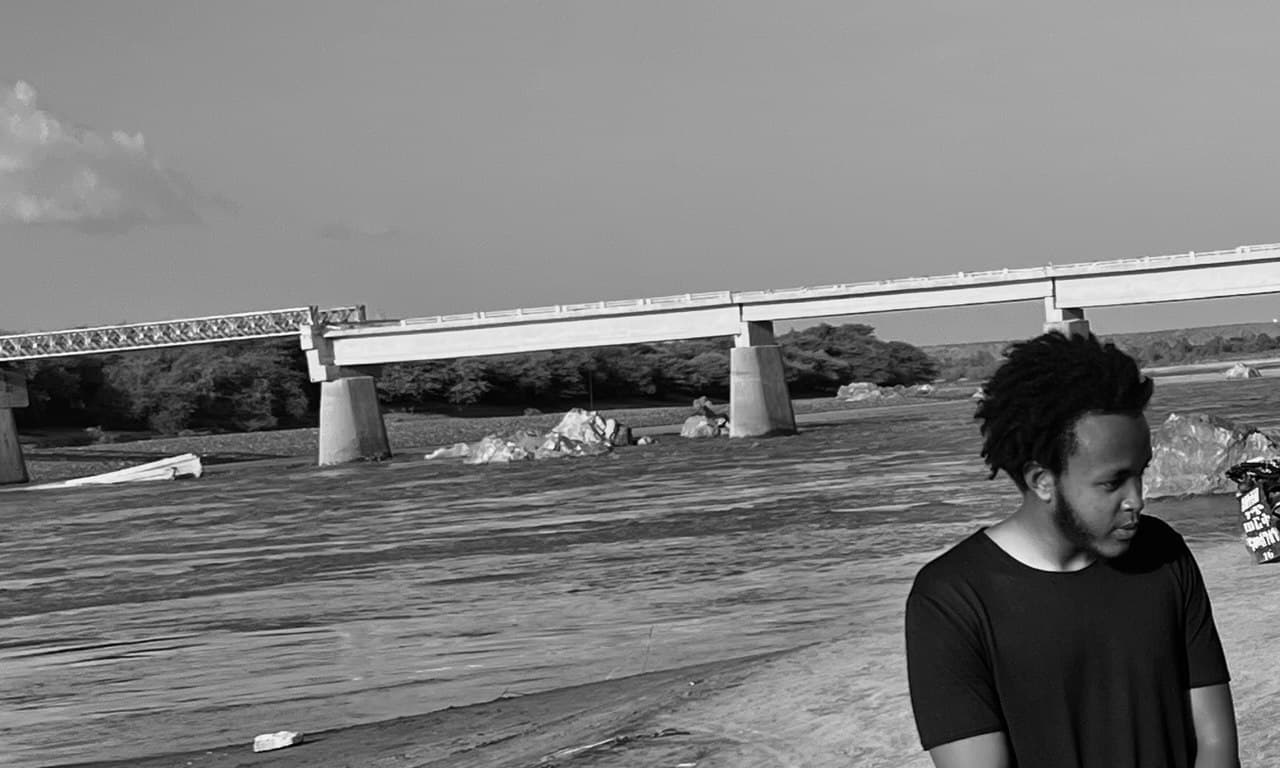
I am 24. I want the youth to show up.
Not as an aspiration, although it is one. As a recognition that the market will keep producing situations where the only capable actor available, at the checkpoint, on the bus, in the regional leader's office, in the negotiation with the redat, is someone in their early twenties with the right legibility for that specific room. Right now, we let that supply emerge by accident, through commercial pressure on late-entrant founders who get assigned the territory no one else took. We could do it on purpose. We could design allocation systems, capital structures, and institutional pathways that route qualified young operators toward the work that requires them, with the support that lets them survive the failures.
The older man got back on the bus in Weqn. We drove the rest of the way to Debark. I sat next to him. He didn't say much for the rest of the ride. Neither did I.